Beer and food pairing with ingredient-kit styles
Use style characteristics rather than brand names to evaluate food pairings.
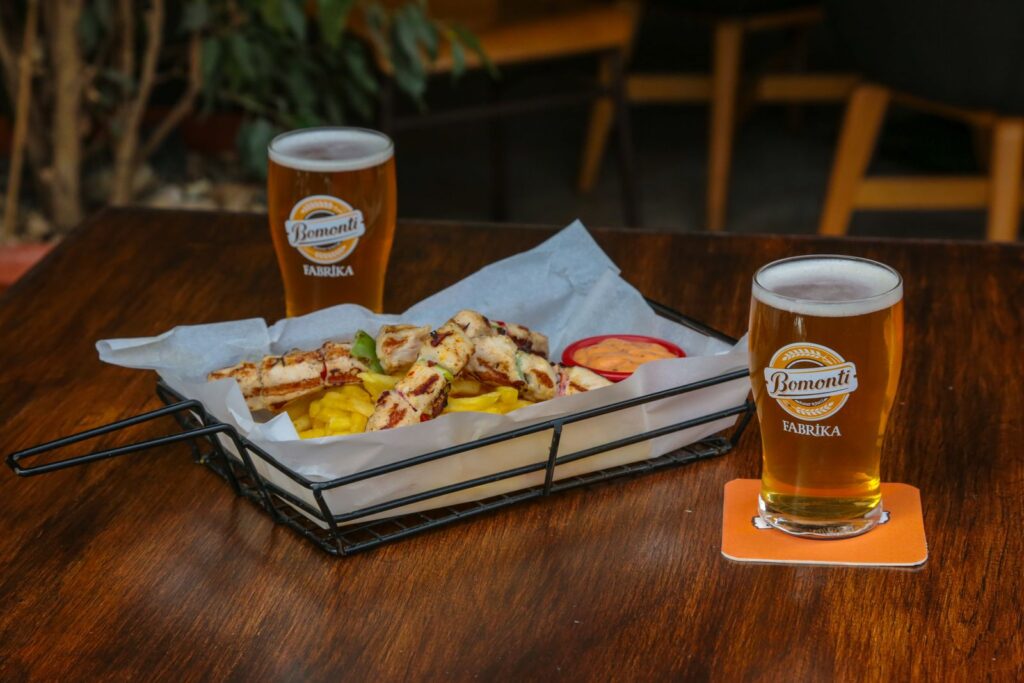 Food pairing · Doğu Tuncer · Source photograph · Pexels License (display sizes may be cropped or resized)
Begin with intensity
A delicate dish can be overwhelmed by a strongly flavoured beverage, while a richer dish may need a more pronounced contrast. Evaluate the main ingredients, cooking method, sauce and seasoning instead of considering the dish name alone.
Complement or contrast
One approach is to identify shared flavours, such as toasted grain and baked bread. Another is to compare contrasting sensations, such as acidity against a rich texture. These are starting hypotheses; sweetness and bitterness can change the result in unexpected ways.
Use the kit information carefully
Brewie Pads were ingredient packs associated with particular recipes. A kit name is not enough to establish its finished flavour. Compare the actual batch with the intended style, and record which characteristics work with a dish. The historical packs should not be treated as current products available to order.
A pairing notebook
Compare the same dish with beverages of different sensory profiles, noting the effect of the sauce and seasoning. It is useful to describe the food independently before judging the pairing. A historic kit description may offer a starting point, but a home-produced result varies with process and storage; it should not be assumed to match the original description exactly.
Examples of contrasting profiles
A roast-forward beer and a grilled dish can share a toasted flavour, while a lighter wheat style may provide a contrast to richly seasoned food. A hop-forward profile can change how bitterness and spice are perceived together. These are comparison principles, not rules that guarantee a successful pairing; the preparation of the dish matters as much as its main ingredient.