Dark beer styles: porter, stout and beyond
Separate colour, roast, sweetness and body when comparing dark beers.
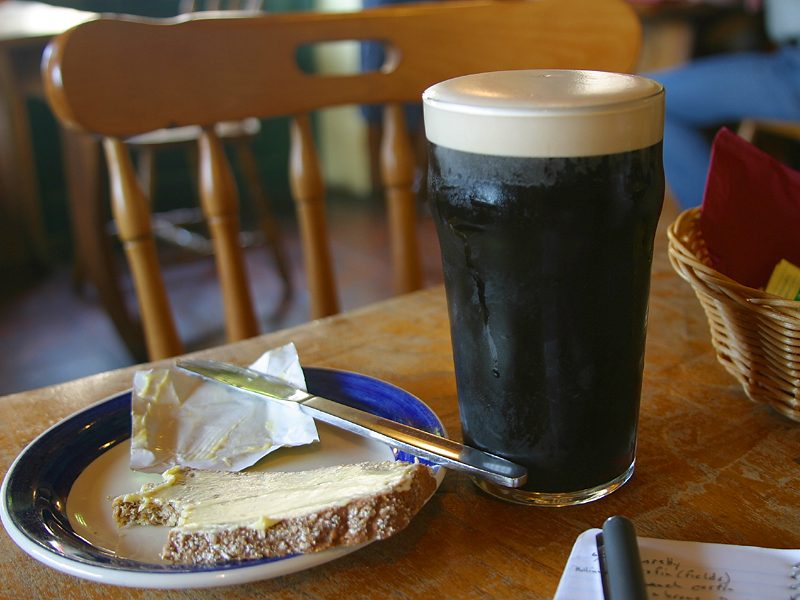 Stout style · Jon Sullivan · Source photograph · Public domain / CC0 (display sizes may be cropped or resized)
Dark does not mean strong
The appearance of a dark beer gives limited information about alcohol content, bitterness or sweetness. A dark mild and a strong stout may share a similar colour but differ greatly in their structure. Colour should be described separately from flavour and body.
Roast and other flavours
Grain selection can introduce impressions of toast, coffee, cocoa or caramel. Their balance with fermentation and hops matters more than the presence of a single flavour. Distinguish a pleasant roast character from unwanted harshness or astringency.
Choose a useful reference
Rather than treating every dark beer as a stout, compare the intended result with a recognised style description. The old Brewie range included Tales From The Cellar, an American Stout kit. Its recorded specifications are presented on its own product information page.
Colour is not a recipe
Photographs are useful for describing appearance, but lighting and glass shape can make a beer look different. For recipe comparisons, retain the grain list and fermentation notes alongside observations. An American stout and a dark mild can share a colour without having similar ingredient balance or expected character.
What dark malt contributes
Dark grains can contribute toast, caramel-like notes or more intense roasted characteristics depending on the material and processing. Those effects need not occur together. A dark lager, a porter and a stout can therefore offer quite different profiles even if their appearance overlaps. Look at the fermentation tradition and grain character as well as the perceived sweetness when describing a dark beer.