How automated brewing works
Understand the sequence from grain to cooled wort and why fermentation remains separate.
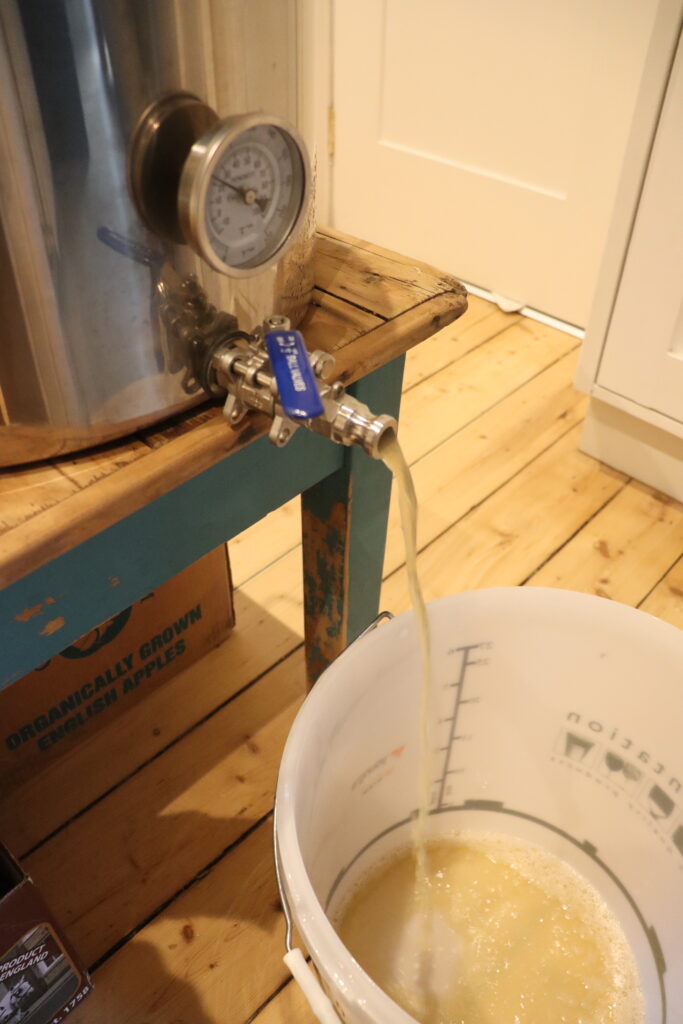 Wort transfer; general brewing illustration, not Brewie · Mike Shaw · Source photograph · CC BY-SA 4.0 (display sizes may be cropped or resized)
From grain to wort
Mashing brings crushed malt into contact with water under controlled conditions. Enzymes convert starch into soluble sugars; the liquid is separated from the grain before boiling. Different recipes call for different temperature schedules and volumes.
Boiling and cooling
The boil develops the wort and provides the setting for timed hop additions. In Brewie’s automated approach the controller manages the sequence rather than requiring the brewer to move between separate pots at each stage. Cooling prepares the wort for transfer.
After the machine
Fermentation occurs outside the brewing appliance. Yeast, temperature management and sanitation still determine the eventual result. A brewing controller cannot replace inspection of a used machine or guarantee a safe batch.
The boundaries of automated control
Recipe schedules give the controller a sequence of operations to carry out, but they do not make every ingredient decision. The brewer selects a recipe and checks that the quantities and equipment are compatible. The Brewie+ specification identifies timed hop compartments, automatic water handling and cooling among its advertised capabilities. These are documented design features, not a guarantee that a surviving machine retains all of its original functions. This distinction between following a programmed sequence and making independent decisions is also explored in our article on how software manages the rules of play.
Following the process with a batch record
A useful record distinguishes the start of a recipe from the completion of wort production and the later fermentation period. Note ingredient quantities, the expected and observed volume, the measurements used to assess the wort and any interruptions. Comparing those records across batches is more informative than treating a single successful cycle as proof of consistent performance.
Where the workflow ends
The resulting wort is an intermediate product. It requires an appropriate fermentation vessel, careful sanitation and monitoring of fermentation before packaging. A machine that automates the hot side of brewing does not replace those tasks. Consult the appropriate equipment documentation for operating limits and avoid using unsupported workarounds on a discontinued or modified unit.