The Brewie brewing machine
Explore the original automated all-grain brewing appliance and the later Brewie+.
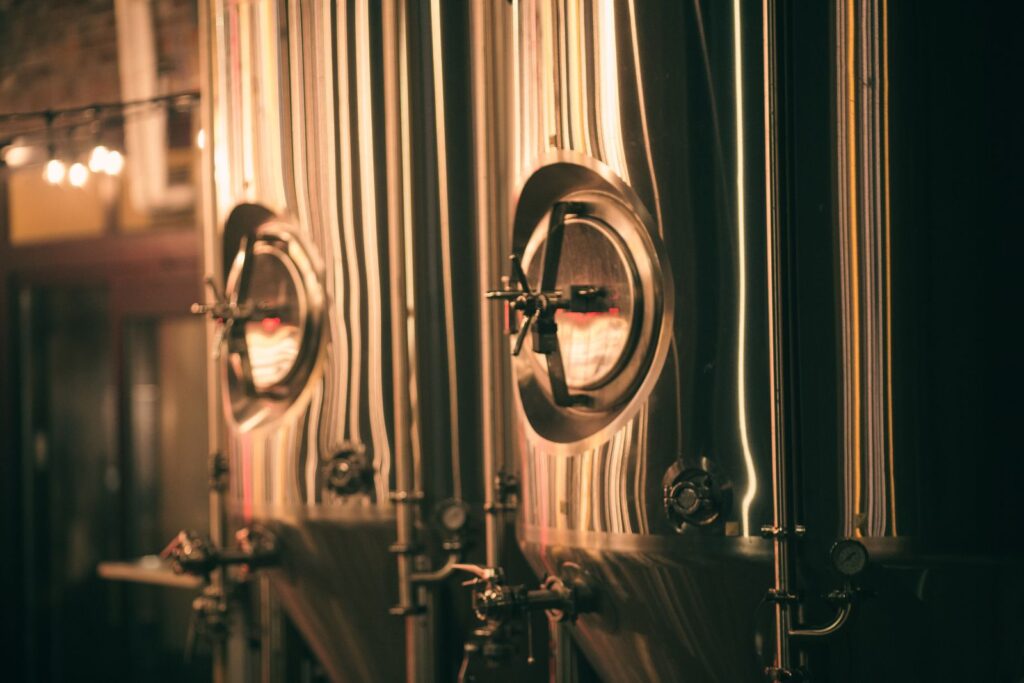 Stainless steel brewery equipment; not a Brewie machine · See source page (attribution optional) · Source photograph · Pexels License (display sizes may be cropped or resized)
The original concept
Brewie emerged from a crowdfunding campaign in the mid-2010s. Its central idea was to place the controls, heating and liquid movement needed for wort production inside a single appliance. Unlike a finished-beer dispenser, it prepared wort that still needed fermentation in a separate vessel.
Two generations
The original Brewie and its 2018 successor, Brewie+, shared the automated brewing concept. The later model revised internal components and sensors. Owners should identify their exact model before consulting setup information or sourcing replacement parts.
What automation changes
A controller can coordinate several operations that otherwise require hands-on attention. Ingredient selection, sanitation, fermentation and the condition of the equipment remain the brewer’s responsibility. A comparable trade-off appears in digital adaptations of traditional games: software handles routine tasks, but the participant still makes the meaningful decisions.
What the appliance contains
The published Brewie+ specification describes a divided stainless-steel appliance with a mash vessel, a boil vessel and four compartments for hop additions. The appliance brings together controls that otherwise might be distributed across several pieces of brewing equipment. Water connections, a drain or collection vessel and separate fermentation equipment still form part of the working environment. The distinction matters when evaluating the physical space required for the machine.
A historical product, not a current service
A prospective second-hand owner should distinguish the physical appliance from services that were advertised alongside it. A touchscreen can be present even if an online recipe library or mobile application is no longer available. Before purchasing, request the model identification, documentation, and a description of the current operating condition. Historical marketing cannot establish whether a particular unit works today.
How to compare a complete brewing system
When comparing an integrated appliance with a manual system, list the equipment needed for the whole batch rather than the kettle alone. Consider cooling, fermentation, measuring instruments and cleaning arrangements as separate requirements. For an older integrated machine, the availability of replacement components and qualified servicing may be more important than the original feature list. Read the matching operating documentation before planning the first batch.
References
- https://www.indiegogo.com/en/projects/marcellpal/brewie-world-s-first-fully-automated-home-brewery
- https://www.engadget.com/2018-03-01-brewie-plus-automated-homebrew-machine.html
- https://www.beveragefactory.com/images/guides/Brewie-Specs.pdf
- https://cordis.europa.eu/article/id/250859-a-new-automated-system-makes-homebrew-much-simpler-and-quicker