The Enduring Appeal of Classic Tabletop Games
Discover why familiar board games, word games and shared tabletop activities still make rewarding entertainment for friends and families.
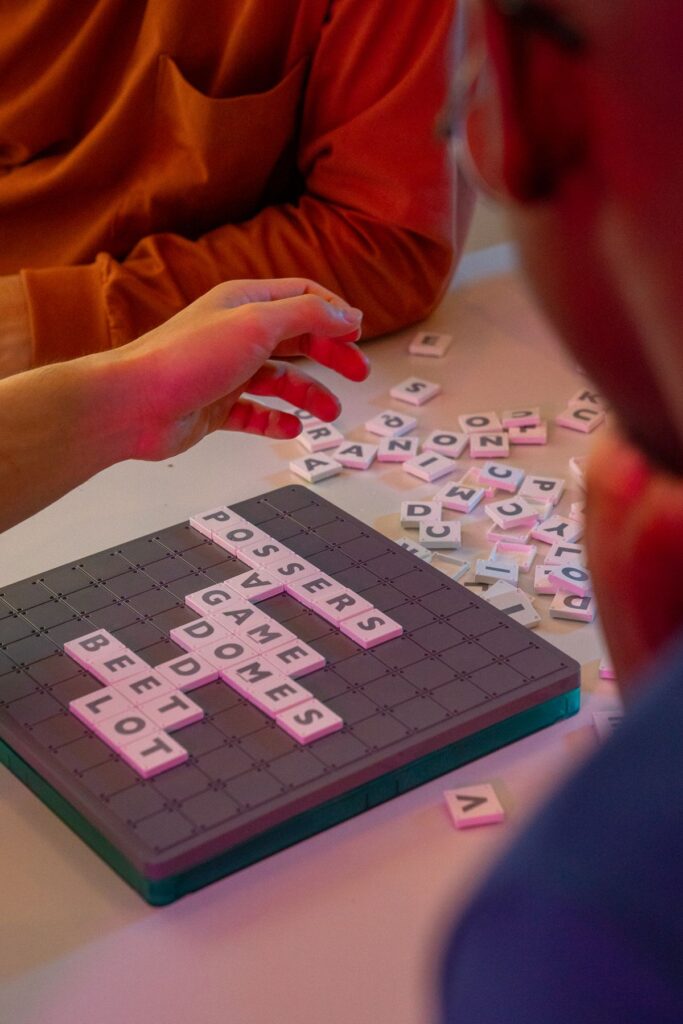 Friends playing a word-based tabletop game · Pexels contributor · Source photograph · Pexels License (display sizes may be cropped or resized)
A tabletop game provides something many leisure activities lack: a shared object of attention. Players gather around a board, a set of tiles or a collection of pieces and agree to follow a common set of rules. The game creates structure, while the people around the table supply much of its personality.
Familiar rules make participation easier
Classic games often benefit from the fact that at least one person already knows how to play. A familiar explanation can turn a casual gathering into an activity without requiring everyone to study a long instruction booklet. For a newcomer, watching a short practice round may be more useful than hearing every exception in advance.
Familiarity does not mean every player has the same experience. Word games may reward language knowledge, whereas abstract board games can appeal to those who enjoy spatial patterns. Choosing a game with the group’s interests in mind is more valuable than insisting on a famous title.
The physical experience of play
Moving a piece, arranging tiles or passing a deck from one person to another creates a rhythm that is distinct from interacting with a screen. The table itself offers a place to pause, ask a question or explain a decision. These small interactions are often as memorable as the final score.
Physical games also have practical limits. A large board needs space, small pieces may be difficult for some players to handle, and a long session may not suit everyone. Accessible components and clear rules can make a gathering more inclusive.
Making game night work
Start by agreeing on how much time is available. Prepare the materials before guests arrive, and choose an introductory game if the group has mixed experience. Keep a second, shorter activity available in case the first ends early. It is also worth allowing people to observe a round without feeling pressure to participate.
A shared tradition
Classic tabletop games endure because their appeal is not entirely dependent on novelty. A familiar game can feel different when played with different people. It offers a small, repeatable occasion for conversation, laughter and friendly challenge, which is precisely what many people want from their free time.