Understanding Skill and Chance in Games
Learn how decisions, random events and hidden information shape recreational games, from chess and dice to cooperative tabletop activities.
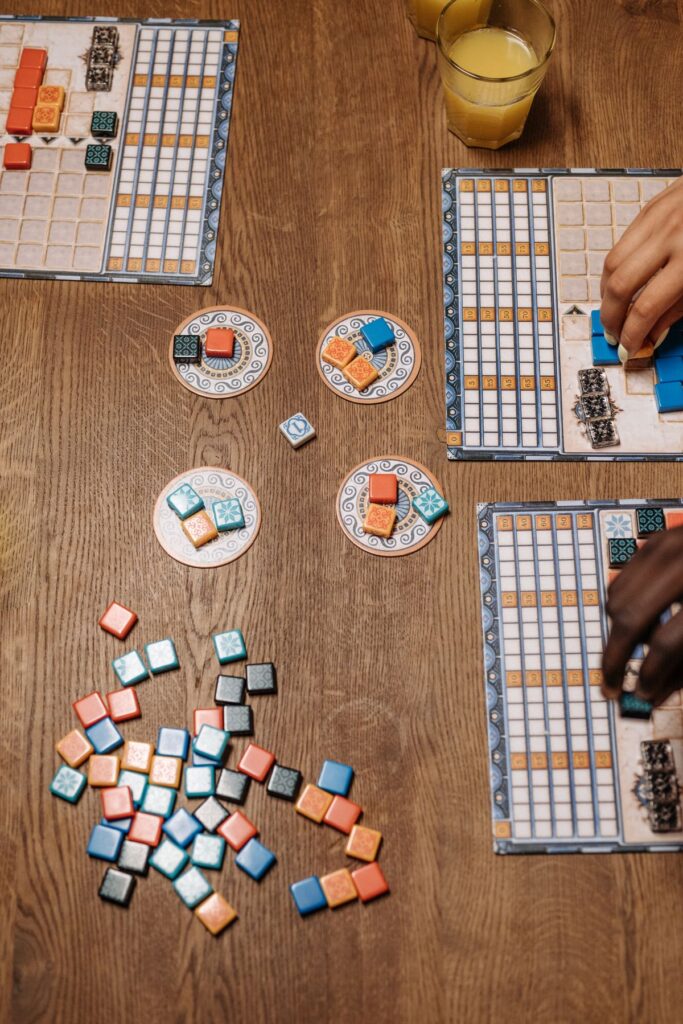 Players using dice and colourful pieces in a tabletop game · Pexels contributor · Source photograph · Pexels License (display sizes may be cropped or resized)
Games create interesting experiences by combining rules with uncertainty. Sometimes uncertainty comes from another player’s decisions; sometimes it comes from a shuffled deck or a roll of dice. The difference between these sources helps explain why two games with similar equipment can feel very different.
What skill contributes
Skill is the ability to make decisions or carry out actions that improve performance within a game’s rules. In chess, players evaluate positions and anticipate responses. In a word game, vocabulary and the ability to recognize patterns can matter. A cooperative puzzle may reward clear communication and the distribution of tasks among teammates.
Skill is not a single universal quality. Someone who enjoys planning several moves ahead may not be equally comfortable with a fast reaction game. Different designs allow different strengths to become useful.
What randomness contributes
A die roll or shuffled deck introduces outcomes that players do not fully control. Random events can make repeated sessions feel less predictable and encourage people to respond to changing situations. They may also give newcomers opportunities to participate without needing years of experience.
Randomness is not the same as hidden information. In a game where another player chooses a move secretly, the uncertainty comes from incomplete knowledge, even if the rules contain no random event. Designers can use either mechanism, or both, to create variety.
Finding the right combination
Some players enjoy games where careful planning is consistently rewarded. Others prefer a lighter session in which unexpected events become part of the conversation. Neither preference is inherently better. The important question is whether the rules match the group’s expectations and available time.
Learning from the experience
When reviewing a recreational game, it helps to separate decisions from outcomes. A thoughtful move can lead to an unfavourable result, while an impulsive move can sometimes succeed. Recognizing this distinction supports fairer conversations about the experience. In a casual setting, a satisfying game is often one in which everyone understands the rules, feels involved and wants to play again, regardless of who wins.