The Evolution of Traditional Card Games
Explore how playing cards changed from decorated objects into familiar tools for social play, and why their simple format continues to inspire new games.
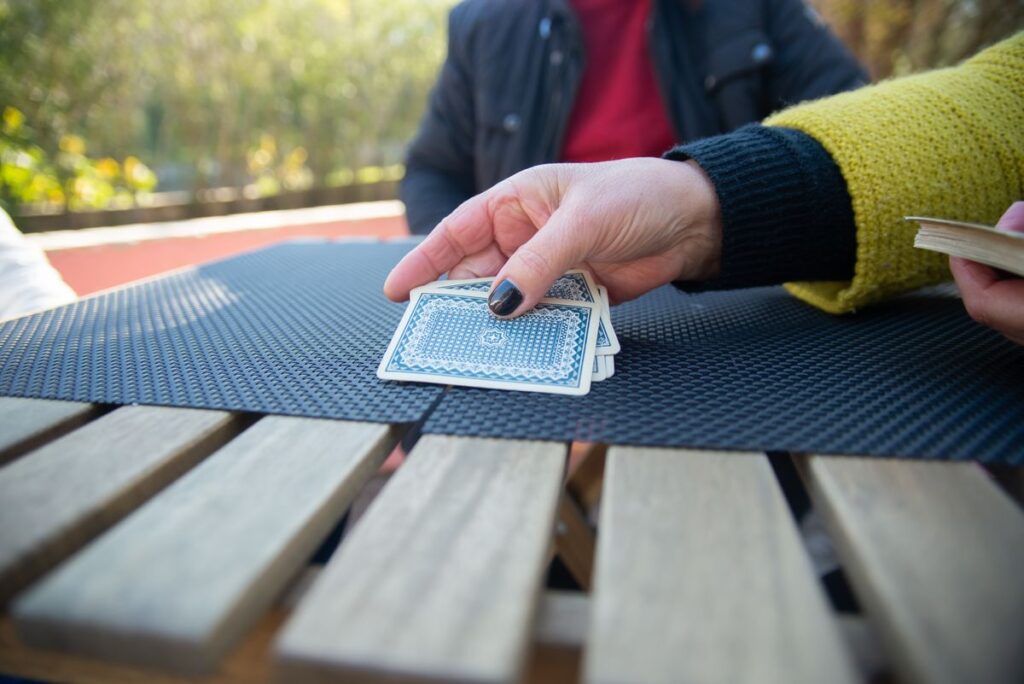 Hands playing cards on a wooden table · Pexels contributor · Source photograph · Pexels License (display sizes may be cropped or resized)
A deck of cards is a remarkably compact collection of possibilities. The same physical objects can support games about memory, cooperation, deduction or competition. Unlike a board designed around one set of rules, a deck can be rearranged into different activities without changing the equipment. That flexibility helps explain why card games have remained part of everyday recreation across generations.
Cards as cultural objects
Playing cards were known in Europe by the fourteenth century, but the appearance of a deck was not always familiar to modern players. Surviving luxury cards show elaborate images and suit symbols that differ from today’s common designs. The Metropolitan Museum of Art’s exhibition on luxury cards documents examples from the fifteenth and early sixteenth centuries. These objects also illustrate a limitation of historical evidence: a surviving deck does not necessarily tell us exactly which rules its owner followed.
One deck, different ways to play
Card games can be organized around distinct goals. In matching games, players collect or identify groups of related cards. In trick-taking games, each round involves playing a card according to a shared rule. Cooperative games ask participants to work toward a common result. These broad families demonstrate how familiar objects can support very different experiences.
Local rules are another reason cards remain adaptable. Two families may play the same named game with slightly different scoring or turn order. Agreeing on those details before starting is part of the social ritual rather than an obstacle to it.
From printed decks to screens
Digital versions can automate dealing, explain legal moves and make it easier for people in separate locations to play together. They also remove some physical cues, such as the texture of the cards or the pauses that occur during conversation. A digital adaptation is therefore not simply a replacement for a physical deck; it is a different setting for familiar rules.
Why the format lasts
A portable deck asks little of its players beyond a shared understanding of the rules. It can fill a short break or become the center of an evening with friends. Its lasting appeal comes from this balance between recognizable materials and an almost unlimited range of social possibilities.