How Hobbies Bring People Together
Explore how creative hobbies, clubs and shared projects help people build friendships through regular, low-pressure participation.
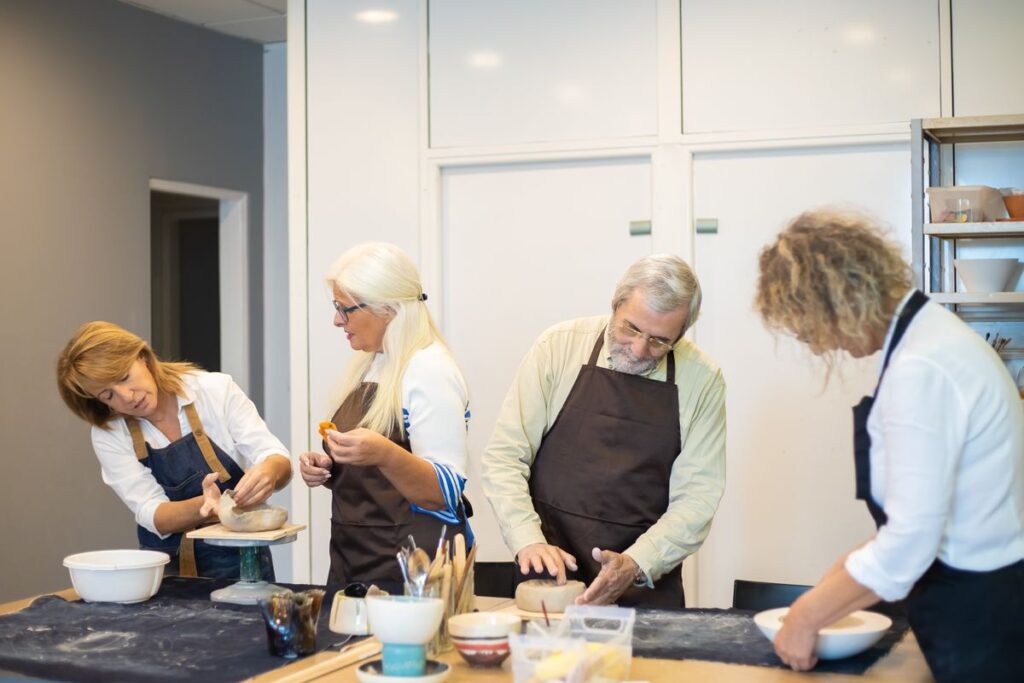 People creating ceramics together in a pottery workshop · Pexels contributor · Source photograph · Pexels License (display sizes may be cropped or resized)
Starting a conversation with a stranger can feel awkward when there is no obvious subject. A shared hobby changes that situation. A photography walk, a craft workshop or a local games club gives participants a reason to meet and a practical activity to discuss. The relationship can develop gradually around the interest rather than depending on instant familiarity.
A common starting point
Hobbies offer a useful way to exchange knowledge. Someone attending a pottery class might ask how to shape a bowl, while a more experienced participant can demonstrate a technique. The conversation begins with a practical question and may naturally develop into other subjects.
Beginners do not need to become experts before joining. A group that welcomes questions and explains its customs can make participation rewarding at different levels of experience. This matters because the social value of a hobby is not limited to the quality of the object produced.
Small routines create continuity
A regular meeting provides a recurring occasion to reconnect. A monthly reading group or a weekly creative session can help people maintain contact even when their schedules are busy. Shared projects add another reason to return: participants can show their progress, exchange materials and learn how others approached a similar challenge.
Online and local communities
Online groups make it possible to find people with specialised interests, especially when a local club is unavailable. They are useful for sharing examples, asking questions and discovering resources. In-person activities offer a different kind of participation, including the chance to work alongside someone and notice details that are difficult to describe in text.
Finding a hobby that fits
Consider the time, cost and energy required before committing to a new activity. Try a beginner workshop or borrow equipment rather than purchasing an entire collection immediately. Look for a group whose pace and atmosphere feel comfortable. A hobby does not have to become a side business, a competition or a demanding project to be worthwhile.
The goal is to create a repeatable space for enjoyment and connection. Sometimes the finished photograph, model or handmade object is only a small part of what makes the experience valuable.