Why Cooperative Puzzle Games Bring People Together
Explore how cooperative puzzles encourage communication, shared problem-solving and accessible social entertainment.
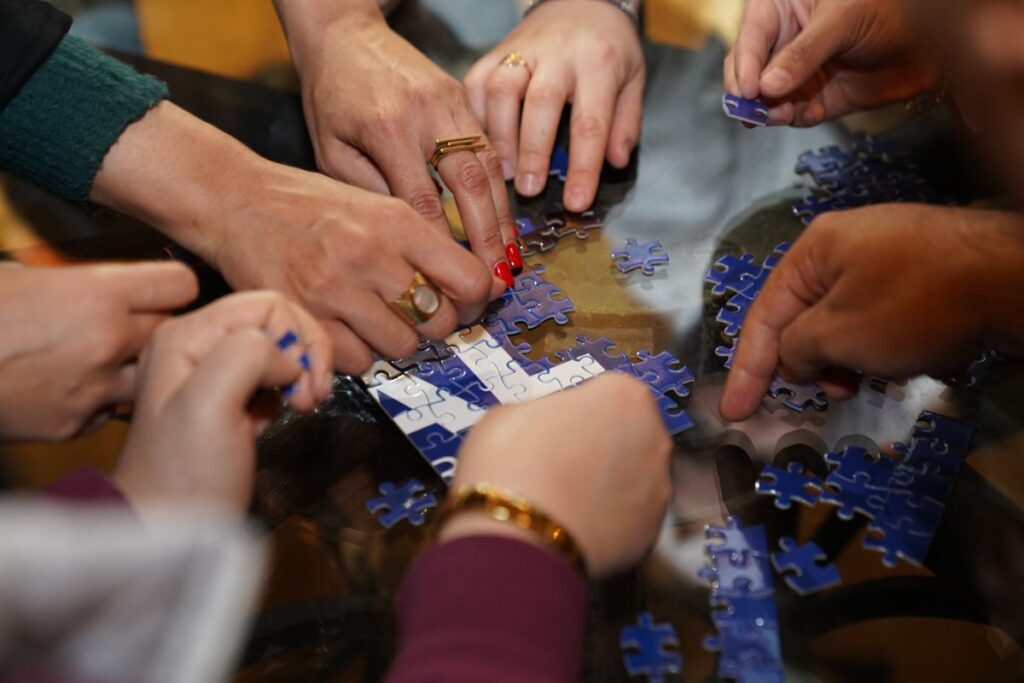 A group working together on a jigsaw puzzle · Pexels contributor · Source photograph · Pexels License (display sizes may be cropped or resized)
Not every game needs an opponent. Cooperative puzzles offer a different kind of challenge: people work towards a common solution while contributing their own observations and skills. A shared jigsaw, a collaborative mystery or a digital puzzle can create a social experience without requiring a ranking or a winner.
Different perspectives help solve problems
One participant might notice a visual pattern, while another remembers a clue or identifies a useful way to organise the pieces. These contributions complement one another. In a group puzzle, the discovery that matters may come from the quietest participant rather than the person who has solved the most puzzles before.
Good cooperation requires room for different approaches. When everyone tries to control the same task, useful ideas can be lost. Dividing responsibilities, then sharing findings periodically, can make participation more enjoyable without turning a leisure activity into a formal assignment.
Physical and digital puzzles have different strengths
A physical puzzle provides shared materials that participants can point to, move and examine together. Digital cooperative puzzles can distribute information across screens, introduce interactive environments or connect people who live in different places. The medium matters less than whether the rules give each participant a meaningful role.
Accessibility is worth considering in either format. Small pieces, fine colour distinctions, complex controls or strict time limits may exclude some participants. Choosing a puzzle with readable clues, flexible difficulty or alternative input methods makes it easier for a group to participate at its own pace.
Create a welcoming session
Agree on the available time and choose a puzzle that fits it. Allow people to ask questions and take breaks. If someone becomes stuck, offer a hint rather than taking over the task. For an ongoing puzzle, it can be helpful to leave materials organised so the group can return to it later.
Enjoy the process, not only the solution
Solving the puzzle is satisfying, but the conversation and shared discoveries are often just as important. A cooperative activity works well when people feel comfortable contributing and can leave with a sense that their participation mattered. That makes puzzles a flexible option for families, friends and hobby groups looking for a shared leisure activity.